Mobile coffee is one of the few food businesses you can start with one product and one person. The question that decides your first year is not the beans. It is what you put the espresso machine in: a cart you push, a trailer you tow, or a van you drive.
Each one wins somewhere. This guide sets out what each setup costs to get on the road, what it needs from a site, and where it earns, so you can match the format to the trade you actually plan to do.
The short version
- Coffee cart: lowest entry cost, no towing, but it lives where you put it and depends on the venue for power, water and shelter.
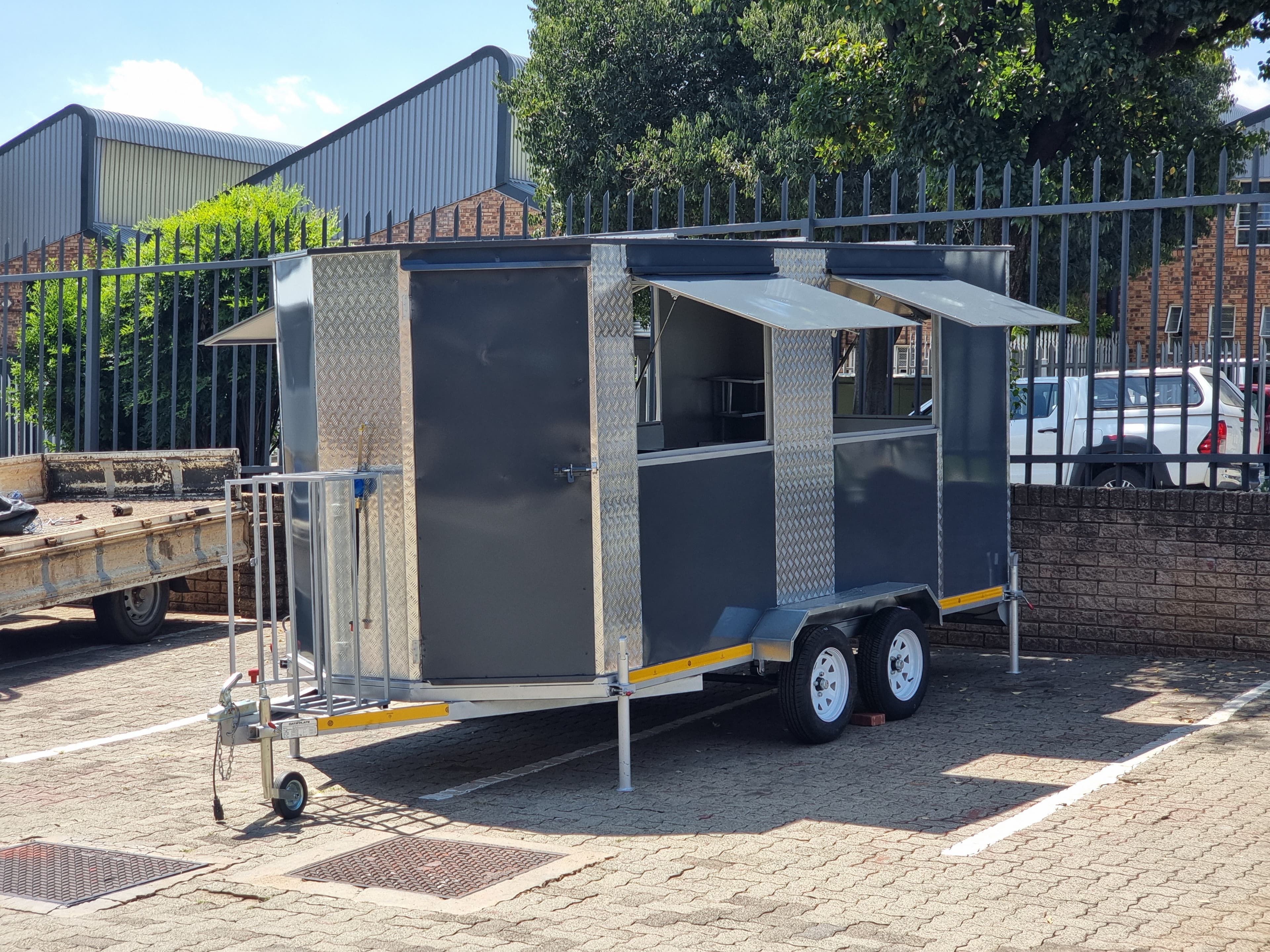
- Coffee trailer: towable behind an ordinary car or bakkie, registered as a trailer, carries its own counters, water and plug points. From R45,750 at Trailored.
- Coffee van: a vehicle first and a café second. You buy the van, then the conversion, and licensing follows the vehicle rather than a trailer.
Coffee carts: cheap to start, hard to move
A cart is the right answer when the site is fixed and indoors: an office lobby, a campus building, a shopping-centre concourse. There is nothing to register, nothing to tow and no trailer to store. Your capital goes into the machine and grinder, which is where a coffee business should spend first.
The cost shows up in flexibility. A cart needs the venue's power and water, and once the lease or the foot traffic changes you are looking for a new indoor site with the same services. It also cannot work an outdoor event without borrowed shelter and a long extension lead.
Coffee trailers: one unit, many sites
A trailer is the format for operators who trade in more than one place: weekend markets, sports days, corporate activations, a weekday office park and a Saturday wedding. It is towed by the vehicle you already own, parks where a car would, and carries everything the barista needs.
Trailored builds the coffee trailer differently to the rest of the food range. Instead of a fixed equipment list we start with an insulated double-panel shell, the 2.4 m by 1.6 m Pikila footprint as the minimum, and fit it out around your own espresso machine, grinder, boiler and under-counter fridge. Counters, plug points, water and waste are placed where your setup needs them. Pricing starts from R45,750 for the double-panel base shell and is finalised once the layout and equipment are agreed.
Every trailer leaves our Randburg factory roadworthy and registered, with a 12-month warranty on the trailer. That matters more for coffee than people expect: markets and event organisers increasingly ask for registration papers before they allocate a bay.
- Tow with a standard car or bakkie; no special licence for a light trailer of this size.
- Insulated shell keeps the interior workable in Highveld heat and winter mornings.
- Own water tank and waste, so you are not dependent on the site.
- Resale value holds because the shell is generic and the equipment is yours to take out.
Coffee vans: a vehicle with a café inside
A converted van is the most self-contained option: drive in, open the hatch, trade. It suits a single operator doing a fixed daily round, and it looks the part for brand work.
It is also the most capital-intensive route. You buy or finance a suitable van, then pay for the conversion, and the vehicle carries the running costs of a vehicle: insurance, fuel, servicing and licensing of a modified vehicle. If the van is off the road, so is the business. With a trailer the tow vehicle and the café are separate, which is why many operators who start with a van move to a trailer once they add a second site or a second team.
How to decide
- One fixed indoor site with power and water: start with a cart and spend on the machine.
- Two or more sites, or any outdoor events: a trailer, fitted around your equipment.
- A single daily round with a strong brand element and the budget for a vehicle: a van, with the trailer as the growth step.
- Unsure: buy the espresso equipment first. It moves with you into whichever format you choose next.
What Trailored includes with a coffee trailer
The base shell, the counters and fit-out around your equipment, plumbing for water and waste, plug points sized for an espresso machine and grinder, NRCS registration, roadworthy papers and a 12-month warranty on the trailer. Send us a photo of your equipment and the sites you plan to trade at, and we will quote the layout on WhatsApp.