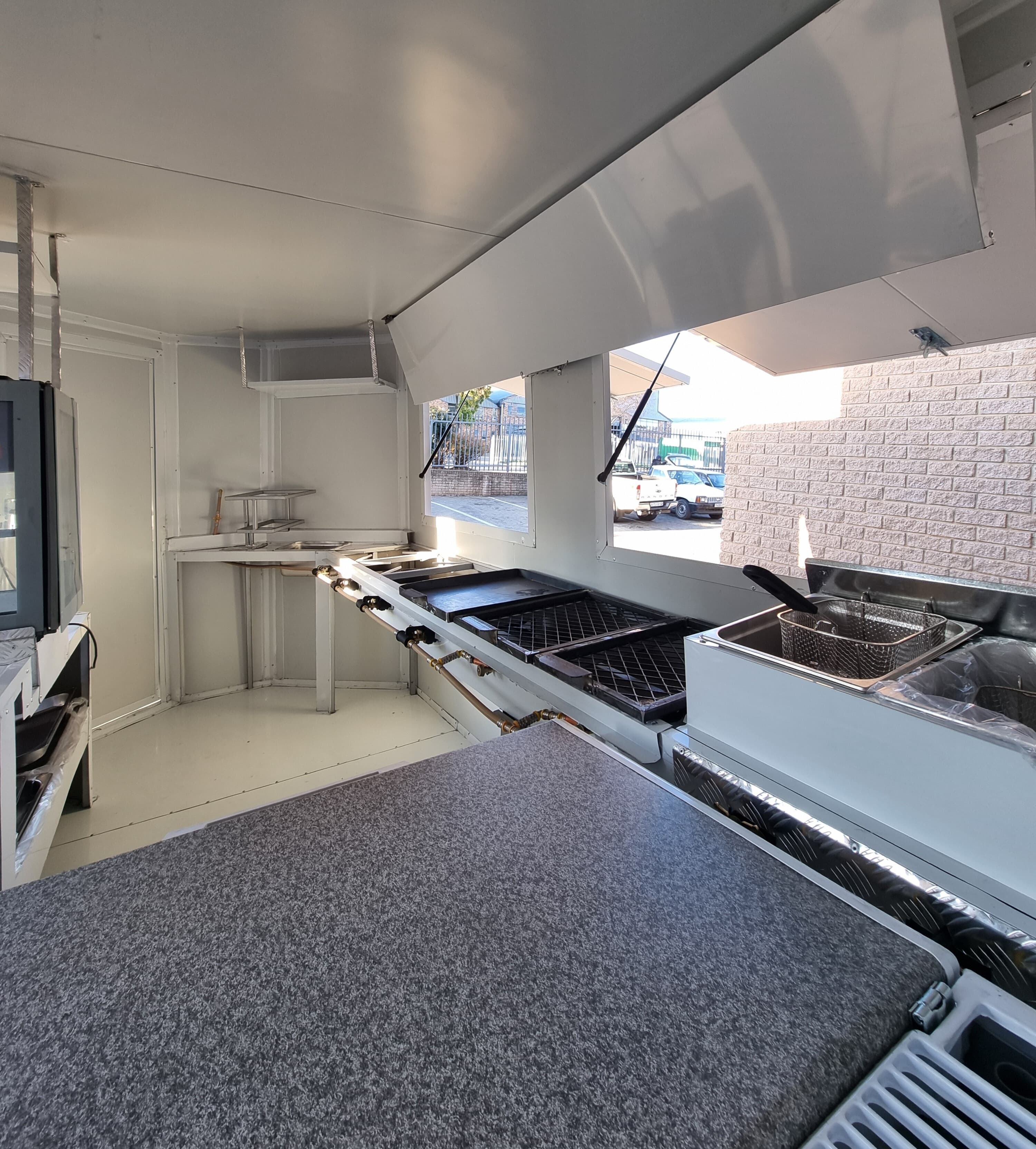
Compliance is one of the easiest things to underestimate when buying a mobile kitchen. The trailer needs to be roadworthy, the food-handling space needs to be practical for inspection, and gas or electrical work may need certificates depending on the final setup and trading site.
This guide explains the main compliance layers in plain English. It is not legal advice, because municipal and site requirements can differ, but it will help you ask the right questions before you buy.
Start with the trailer itself
A mobile kitchen is still a trailer, so the first compliance layer is road use. In South Africa, trailer categories and compulsory specifications depend on the trailer's gross vehicle mass. Lighter trailers generally fall into O1 or O2 categories, while heavier trailers fall into O3 or O4 categories.
Trailored builds in an NRCS-registered facility and supplies roadworthy papers on delivery for standard catalogue builds. Registration and licensing can also be handled for you, with ownership transferred on delivery.
- Confirm the final trailer mass and towing requirements before ordering.
- Ask whether the unit will be supplied with roadworthy paperwork.
- Make sure the VIN, registration and ownership documents match the delivered trailer.
- Check that your tow vehicle is suitable for the final loaded trailer.
NRCS does not replace municipal approval
NRCS registration and road compliance help prove that the trailer has been built for public-road use. They do not automatically give you permission to trade food in a specific municipality, shopping centre, event site or landlord-controlled location.
Food operators should also speak to the local municipality or venue about trading permission, fire requirements, water and waste rules, and whether a Certificate of Acceptability is required for the way food will be prepared or served.
Food premises and Certificate of Acceptability
South Africa's hygiene regulations for food premises apply to places where food is handled, and the official wording includes vehicles. In practice, many mobile food operators will need to work with the local Environmental Health office before trading.
The Certificate of Acceptability is issued by the local authority. It is tied to the person in charge, the premises or vehicle, and the type of food handling approved. If the layout, person in charge or food-handling activity changes, the operator may need to notify the local authority or reapply.
- Plan washable interior surfaces, easy-clean floors and practical ventilation from the start.
- Keep raw and cooked food workflows separate where your menu requires it.
- Provide hand-washing, utensil-washing, water and waste arrangements that fit your trading model.
- Confirm local inspection requirements before finalising a custom layout.
Gas and electrical certificates
If your mobile kitchen includes fixed LPG or electrical installations, certificates may be required by law, by your insurer, by a landlord, by an event organiser or by the municipality. These certificates are usually issued by appropriately registered installers or inspectors, not by the trailer manufacturer as a blanket document.
Trailored can build with gas and electrical compliance in mind and can arrange certificates at additional cost where required. The safest approach is to identify the trading site and equipment list early, then confirm which certificates the site owner or municipality will ask for.
What to ask before you approve the build
The best compliance outcome happens before fabrication starts. Once equipment, plumbing, hatches and gas layouts are fixed, changes become slower and more expensive.
- Where will the trailer trade: roadside, event site, mall, market, school, mine or private venue?
- Will cooking happen inside the trailer, or only reheating and serving?
- Which appliances are gas, electrical or both?
- How will fresh water, grey water, waste and cleaning supplies be handled?
- Does the venue require fire, gas, electrical or health documentation before access is granted?
Trailored's practical role
Trailored helps with the build side of the compliance journey: road-ready fabrication, practical food-trailer layouts, equipment integration, roadworthy papers, trailer registration support and guidance on the certificates commonly requested for mobile kitchens.
The operator remains responsible for local trading permission, staff training, food-safety practices and site-specific approvals. If you are not sure what your municipality or venue requires, bring those requirements into the quote conversation early so the trailer can be specified properly.